Let's get one of the biggest coffee myths out of the way right now. Is coffee bad for an ulcer? The short answer, thanks to a huge body of modern research, is no—coffee does not cause ulcers.
It might feel like a surprising verdict, especially given the decades of outdated advice that pointed the finger directly at our morning ritual. But the science has come a long way, and it’s time to set the record straight.
The Real Truth About Coffee and Ulcers

For a long time, coffee carried the unfair reputation of being a direct cause of peptic ulcers. The logic seemed simple enough: coffee stimulates stomach acid, so it must be eroding the stomach lining, right? This is a classic case of seeing smoke and blaming the wrong fire.
We now know with certainty what the real culprits are, and your daily cup of coffee simply isn't one of them. The two primary causes of ulcers are:
- An infection from the H. pylori bacteria.
- Long-term, heavy use of nonsteroidal anti-inflammatory drugs (NSAIDs) like ibuprofen and aspirin.
From Myth to Modern Science
This isn't just a new opinion; it's a conclusion built on solid scientific evidence. For instance, a major Japanese study that followed over 8,000 people completely turned the old myth on its head. The researchers found no link whatsoever between drinking coffee and developing an ulcer.
In fact, the study even hinted that coffee might offer some protection. The data showed a 32% reduced risk of developing certain ulcers in moderate coffee drinkers. You can read through the specifics of how coffee interacts with our gut in this deep dive from the National Library of Medicine on gastrointestinal health.
This brings us to the most important distinction you need to understand:
Causing an ulcer vs. irritating an existing one. Coffee does not create ulcers in a healthy stomach lining. However, if you already have an ulcer, the acid-stimulating effects of coffee can sometimes make the symptoms feel worse.
To make this crystal clear, let's break down the old beliefs versus what we know today.
Coffee and Ulcers Myth vs. Scientific Reality
The table below contrasts the outdated myths about coffee and ulcers with what current scientific research has confirmed.
| Common Myth | Scientific Reality |
|---|---|
| Drinking coffee causes stomach ulcers. | Ulcers are primarily caused by H. pylori bacteria and NSAIDs, not coffee. |
| The acid in coffee erodes the stomach lining. | The stomach's natural mucus lining is incredibly tough and designed to handle acid. |
| You must stop all coffee if you have an ulcer. | Symptom management is key; many people can enjoy coffee by changing their habits. |
Ultimately, while coffee isn't the villain it was made out to be, how you drink it can make a difference in your comfort if you're already dealing with ulcer symptoms.
What an Ulcer Really Is and What Causes It

Before we can tackle the coffee question, we need to get on the same page about what an ulcer actually is. Think of your stomach and intestines as having a built-in, self-healing shield—a slick layer of mucus that guards the delicate tissue underneath from powerful stomach acid.
An ulcer is simply an open, painful sore that forms when that protective shield breaks down. It's a raw spot where acid can directly irritate the stomach or intestinal wall.
These sores are generally grouped by where they show up, which helps doctors figure out the best way to treat them.
The Two Main Types of Peptic Ulcers
Knowing the difference between the two main kinds of peptic ulcers is key to managing them. It all comes down to location.
- Gastric Ulcers: These form right on the inner lining of your stomach.
- Duodenal Ulcers: These pop up in the first part of your small intestine, an area called the duodenum.
While they're in different places, they can feel frustratingly similar—that gnawing or burning pain, bloating, and general indigestion are common to both. For decades, the blame was pinned on stress and spicy food, but we now know that’s not the real story.
So, what are the true culprits behind these painful sores? It really boils down to two major offenders.
The most common cause of peptic ulcers is not your diet, but factors that actively break down the protective mucosal barrier. This key distinction reframes the conversation from blaming foods to identifying the true source of the damage.
The Real Causes of Ulcers
The science is crystal clear on this: your morning coffee habit isn't what causes an ulcer. The vast majority of ulcers are the direct result of two specific problems that weaken the stomach's natural defenses.
-
Helicobacter pylori (H. pylori) Infection: This is a surprisingly common bacteria that can set up camp in your digestive tract. While many people carry it without any issues, H. pylori can disrupt the stomach's mucous layer and cause inflammation, leaving the lining vulnerable to acid. Since this infection is a primary cause, getting a Helicobacter Pylori test is a crucial step if you suspect an ulcer.
-
Long-Term NSAID Use: Regularly taking nonsteroidal anti-inflammatory drugs (NSAIDs)—think ibuprofen or aspirin—is the other leading trigger. These common pain relievers can interfere with the stomach's ability to protect itself, eventually allowing an ulcer to form. In fact, studies show NSAIDs are responsible for a huge portion of all diagnosed ulcers.
Once you understand this, the whole picture changes. The question isn't whether coffee causes ulcers (it doesn't). The real, practical question is how coffee might affect an existing ulcer and what you can do to manage your symptoms while still enjoying your cup.
What Science Actually Says About Coffee and Ulcer Risk
Let's move past the old-school advice and look at what the hard evidence tells us. For years, the idea that coffee was a one-way ticket to an ulcer seemed to make sense, but modern research paints a much more encouraging picture for coffee lovers.
The old thinking was based on a simple, but ultimately incomplete, observation: coffee gets your stomach to produce more acid. That part is true. But it's a huge leap to say that this acid stimulation can burn a hole in an otherwise healthy stomach lining. It just doesn't work that way.
What Global Research Reveals
When scientists track huge groups of people over many years, they consistently fail to find a direct link between drinking coffee and getting a peptic ulcer in the first place.
Think of it this way: blaming coffee for causing an ulcer is like blaming a heavy rainstorm for a leaky roof. The rain didn't create the hole—it just revealed the problem that was already there. Most modern research sees coffee in the same light.
A great example is a major 2020 review published in the Research, Society and Development journal. It crunched the numbers from eight different studies involving thousands of people between 2000 and 2020. The final verdict? There's just no solid scientific evidence that coffee consumption leads to the development of peptic ulcers. If you want to dive into the data yourself, you can read the broad analysis on coffee and ulcer risk they compiled.
This kind of large-scale analysis has been instrumental in correcting that old, mistaken belief. It gives us a much clearer view of how our daily brew really interacts with our digestive health.
From Risk to Potential Protection
Some studies even flip the script, suggesting that a moderate coffee habit might offer a bit of a protective effect.
When you're reading a study, you might see a term like "odds ratio." It's just a way of measuring risk. An odds ratio of 1.0 means no change in risk. But if the number is less than 1.0, it suggests the risk is actually lower.
For instance, some data has shown that drinking one or two cups of coffee daily was associated with a 32% reduced risk for gastric ulcers and an impressive 46% reduced risk for duodenal ulcers. Now, this doesn't mean you should start drinking coffee to treat an ulcer, but it's powerful evidence that coffee isn't the villain it was once made out to be.
Key Takeaway: The scientific consensus has completely shifted. For the average person, drinking coffee does not increase your risk of developing a stomach or duodenal ulcer.
This is a really important distinction. It lets us stop asking, "Does coffee cause ulcers?" and start asking a more practical question: "If I already have an ulcer, how might coffee affect my symptoms?" Sometimes, what feels like an ulcer might be general discomfort or a bout of queasiness. If you've ever felt that way after a cup, it’s worth exploring the different reasons why. We break it all down in our article on how coffee can sometimes cause nausea.
How Your Coffee Routine Affects Ulcer Symptoms
So, if modern science says coffee doesn't cause ulcers, why does it sometimes bring on that familiar, gnawing pain for those of us who already have one? It turns out the answer isn't about if you drink coffee, but how you drink it. At its core, the issue is that coffee stimulates stomach acid production, which can seriously irritate the raw, sensitive lining of an existing ulcer.
Think of it this way: an ulcer is like a fresh scrape on your skin. Pouring lemon juice on it would sting, but the juice didn't cause the scrape in the first place. It's the same idea with coffee. That boost in stomach acid can aggravate a pre-existing ulcer, triggering pain and bloating. The good news is, you have a surprising amount of control over this.
It's All in the Details
When it comes to managing ulcer symptoms, not all coffee habits are created equal. Several small details in your daily routine can either dial up the irritation or make your morning cup feel much more comfortable. Understanding these variables is the key to enjoying coffee without the flare-ups.
This chart breaks down the science, moving us from old myths to our current understanding.
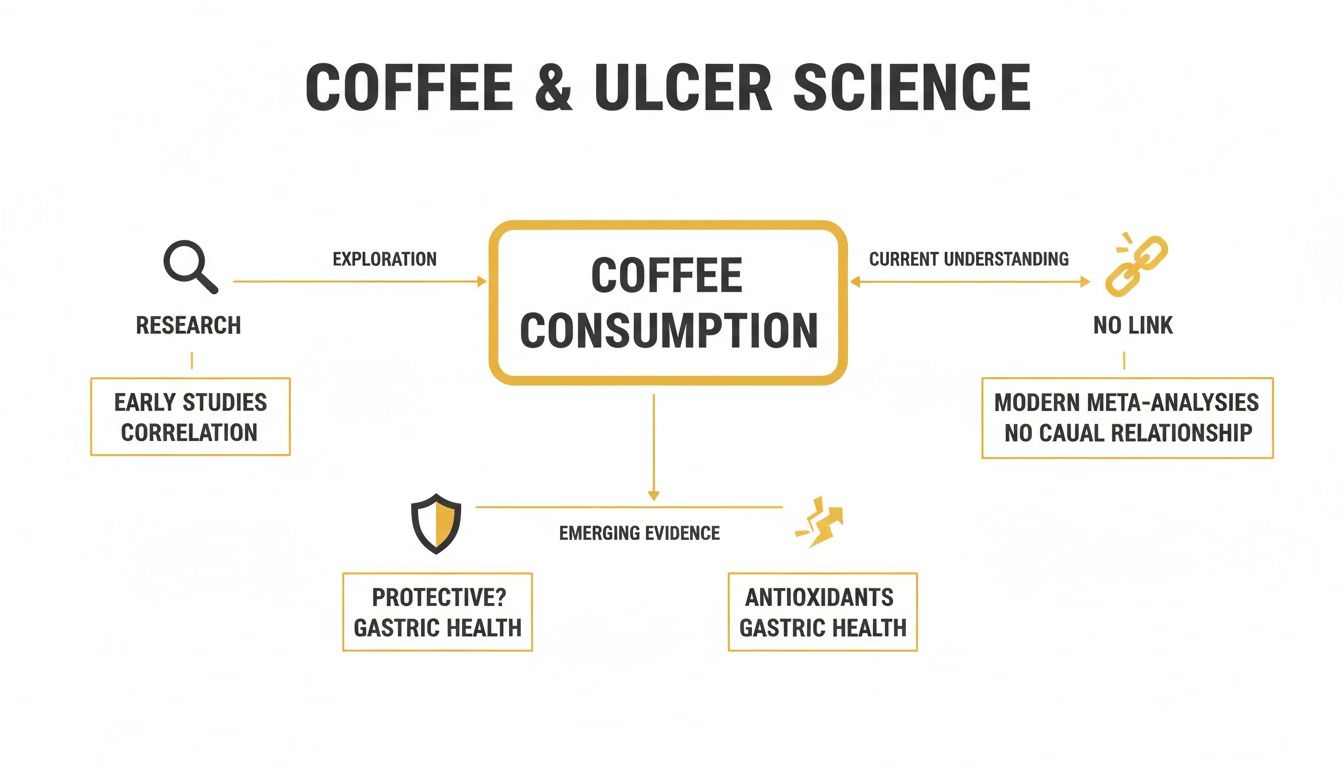
The takeaway is pretty clear: while we know coffee doesn't create ulcers, it can absolutely be a symptom trigger. That’s a crucial distinction. It's also worth pointing out that coffee can worsen symptoms of other digestive issues like GERD, which often shares common ground with ulcers when it comes to triggers.
Key Factors You Can Control
Your coffee ritual is personal, and a few small tweaks can make a massive difference. Here are the most important elements to focus on.
-
Dose and Caffeine Intake: The sheer amount of coffee you drink has a direct line to your stomach's acid production. While older advice might have told you to quit entirely, recent thinking suggests a more moderate path. For many people, sticking to around 300mg of caffeine a day (roughly three standard cups) can help manage symptoms without forcing you to give up coffee completely.
-
Timing is Everything: This is a big one. Drinking coffee on an empty stomach is probably the single worst habit for ulcer irritation. With no food to act as a buffer, the extra acid has nowhere to go but straight to that sensitive ulcer lining. Always, always try to have your coffee with a meal or at least a solid snack.
-
Acidity and Roast Level: Coffee naturally contains several acids that give it that bright, complex flavor we love, but they can also be a source of irritation. The good news is that different roasts and brewing methods yield different acid levels. If you're dealing with symptoms, you might want to learn how to reduce the acidity of coffee by making smarter choices.
-
What You Add to Your Cup: Finally, don't overlook the extras. Sugar, dairy, and even some artificial creamers can cause their own digestive trouble. Try drinking your coffee black for a few days to see if symptoms improve. This little experiment can help you figure out if it’s truly the coffee or just the add-ins causing the problem.
Smarter Sipping Guide for Ulcer Sufferers

Living with an ulcer doesn't automatically mean you have to break up with coffee. It's less about total avoidance and more about making smarter choices. With a few simple tweaks to your daily ritual, you can find a way to enjoy your cup without triggering discomfort.
The whole game plan revolves around one core idea: minimizing irritation to your stomach lining. This is about being deliberate with everything from the beans you select to how you brew and when you drink your coffee. Let's walk through the practical steps that make a genuine difference.
Choose Your Brew Wisely
The kind of coffee you drink and how you make it are probably the two biggest levers you can pull to manage ulcer symptoms. When it comes to stomach comfort, not all coffee is created equal.
Here are a few options that tend to be much gentler on the stomach:
- Dark Roasts Over Light Roasts: It might seem counterintuitive, but the intense heat of a dark roast actually breaks down more of the acids in the coffee beans. Darker roasts also produce a compound called N-methylpyridinium (NMP), which cleverly signals your stomach cells to produce less acid.
- Cold Brew Coffee: The magic of cold brew is in its gentle, low-and-slow extraction. By steeping grounds in cold water for 12 to 24 hours, you get a smooth coffee concentrate that is dramatically lower in acid. In fact, some studies show it can be up to 67% less acidic than a typical hot brew.
- Low-Acid Coffee Beans: Many roasters are now intentionally sourcing and roasting beans to lower their acid content. For anyone with a sensitive stomach or GERD, exploring the world of low-acid coffee for acid reflux can be a revelation.
Choosing a coffee that's inherently gentler gives you a huge head start in making your daily cup a more comfortable experience.
To help you visualize these choices, here’s a quick comparison table breaking down what to look for.
Coffee Choices for a Sensitive Stomach
| Coffee Attribute | Better Choice for Ulcer Sufferers | Why It Helps |
|---|---|---|
| Roast Level | Dark Roast | The roasting process burns off more acids and creates N-methylpyridinium (NMP), a compound that helps reduce stomach acid secretion. |
| Brew Method | Cold Brew | Steeping in cold water extracts fewer acidic compounds from the beans, resulting in a naturally smoother and less acidic coffee concentrate. |
| Bean Type | Low-Acid Varieties | These beans are specifically grown in low-altitude regions or processed to have a lower natural acid content, making them inherently gentler. |
Making just one of these swaps can have a noticeable impact, but combining them—like choosing a dark-roast, low-acid bean to make cold brew—offers the best defense against irritation.
Perfect Your Preparation and Timing
Once you've picked the right coffee, how and when you drink it play an equally critical role. These habits directly influence how your stomach responds to that cup.
If there's one golden rule, it's this: never drink coffee on an empty stomach. Food is your stomach's best friend, acting as a natural buffer that absorbs excess acid and shields the sensitive ulcer lining. Always try to have your coffee with a meal or, at the very least, a solid snack that includes some fiber or protein.
A simple piece of toast with avocado or even just a handful of almonds can make a world of difference. The idea is to give your stomach acid something else to digest besides your own stomach.
You should also pay attention to the strength of your brew. If you enjoy the convenience of an instant coffee like Cartograph's, you have ultimate control here. Start by making it a bit weaker than you normally would—using a little less powder—and see how you feel. You can always increase the strength gradually until you find that sweet spot where flavor and comfort meet.
Remember, moderation is your ally. Spreading out your coffee intake is often much kinder to your system than drinking one large, potent cup all at once.
When You Should Talk to Your Doctor
Learning how to tweak your coffee routine can be a game-changer for managing ulcer discomfort. But it's important to be clear about one thing: this is about managing symptoms, not a substitute for professional medical care. Dietary adjustments are a fantastic tool for day-to-day comfort, but they don’t actually heal the ulcer itself.
Knowing when to switch from self-management to seeking a doctor's help is critical for your long-term health. Some symptoms are more than just a nuisance; they're serious red flags that you should never, ever ignore.
Symptoms That Demand Medical Attention
If you experience any of the following, it’s time to stop guessing and get professional help right away. These signs can point to a much more serious issue, like a bleeding ulcer, which needs immediate treatment.
- Severe or worsening stomach pain that just won't quit, even after you've made changes to your diet.
- Black, tarry, or bloody stools, which are a classic sign of internal bleeding.
- Vomiting blood, which might be bright red or look like used coffee grounds.
- Unexplained weight loss or a sudden, complete loss of appetite.
- Feeling full almost instantly after eating just a tiny bit of food.
Think of these symptoms as your body's emergency alarm. They’re signaling that the problem goes far beyond simple irritation and you need a proper diagnosis to find the root cause, whether it's an H. pylori infection or damage from NSAIDs.
A doctor is the only one who can run the right tests, like an endoscopy, to see exactly what's going on and confirm the ulcer. From there, they can prescribe the right treatment to actually heal your stomach lining, which might involve antibiotics for H. pylori or other specific medications.
Asking "is coffee bad for an ulcer" is smart for managing your daily comfort, but only a doctor's diagnosis can lead to a real cure. Don't put off getting the comprehensive care you need to truly get better.
Your Questions About Coffee and Ulcers Answered
When you're dealing with an ulcer, a lot of questions pop up about your daily habits—especially your morning coffee. It's only natural to wonder what's safe. Let's clear up some of the most common concerns so you can feel confident about what's in your cup.
Is Decaf Coffee a Safer Bet for Ulcers?
Switching to decaf seems like an obvious fix, but it's not a complete free pass. Decaf coffee does remove the main culprit—caffeine—which is a major trigger for stomach acid production. That alone makes it a much gentler option.
However, coffee has other natural compounds that can still prompt a mild acid response. For most people, this effect is far less intense than with regular coffee. If you find a standard brew consistently bothers your ulcer, trying decaf is a smart first move. It often lets you keep the ritual you love without the painful flare-up.
The Verdict: Yes, decaf is generally a safer and gentler choice for ulcer sufferers. It minimizes caffeine-driven acid production, though it's not entirely acid-free.
Does Instant Coffee Make Ulcer Symptoms Worse?
Instant coffee, like the kind from Cartograph Coffee, isn't automatically better or worse for an ulcer. Its real power lies in the control it gives you. Since you're mixing the coffee yourself, you have complete say over its strength.
You can easily use less powder to create a weaker, less concentrated brew that's easier on your stomach. This is a huge advantage. Start with a very mild cup and see how you feel. It's the perfect way to find your own sweet spot between flavor and comfort.
How Does Tea Compare to Coffee for Ulcers?
You might think tea is a safer harbor, but it depends on the type. Many common teas, particularly black and green varieties, contain both caffeine and tannins, a compound that can also encourage stomach acid. For some people, a strong cup of black tea can be just as irritating as coffee.
On the other hand, certain herbal teas are fantastic alternatives.
- Chamomile Tea: Well-known for its calming and anti-inflammatory effects.
- Ginger Tea: Often used to help soothe the digestive tract.
These options are naturally caffeine-free and offer a warm, comforting drink without the risk of an acid backlash.
Can I Drink Coffee Again After My Ulcer Heals?
Absolutely. Once your doctor gives you the all-clear and confirms your ulcer has fully healed, you can usually bring coffee back into your life. The trick is to do it slowly and thoughtfully. Don't jump straight back to drinking a strong, black coffee on an empty stomach first thing in the morning.
Instead, start small. Try a weak, milky coffee alongside a solid meal and pay close attention to how your body responds. By reintroducing it gradually, you give your stomach lining time to adjust and can easily tell if any sensitivity lingers.
Ready to enjoy a delicious, high-quality coffee that puts you in control? Cartograph Coffee offers premium organic instant coffee, perfect for customizing the strength to suit your needs. Find your new favorite brew today.