When you’re reaching for a pick-me-up, the choice between coffee and soda often comes down to caffeine. So, which one packs a bigger punch? The short answer: it’s almost always coffee, and by a long shot.
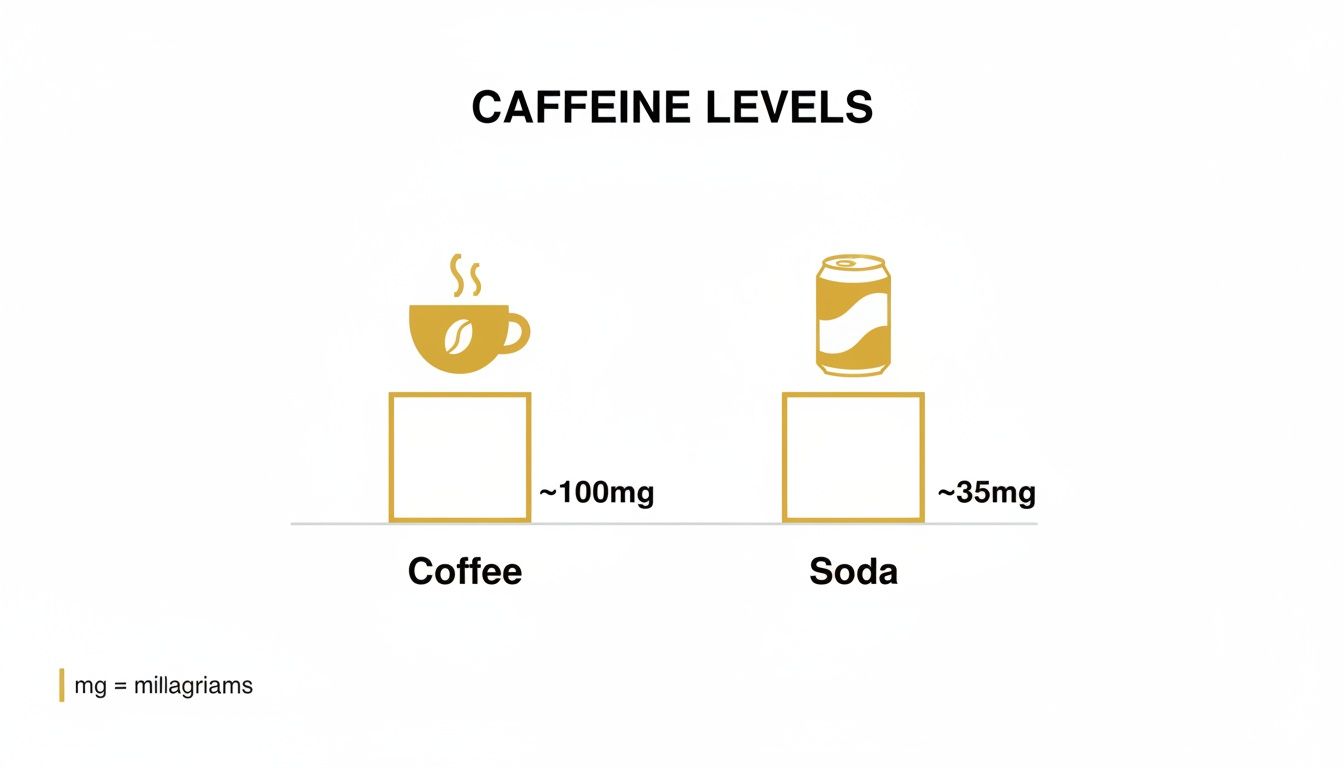
An average 8-ounce cup of classic drip coffee contains around 95-115 mg of caffeine. Compare that to a typical 12-ounce can of cola, which has only about 30-40 mg. That means your morning coffee can easily have three times the caffeine as an entire can of soda.
The Quick Answer: Coffee vs. Soda Caffeine Levels
Let's put those numbers into perspective. The difference isn't just a few milligrams—it's substantial enough to impact your daily energy and how you manage your caffeine intake.
A standard 8-ounce cup of brewed coffee can swing wildly, from 95 mg on the low end to over 200 mg for stronger brews. Meanwhile, a 12-ounce can of cola barely moves the needle, usually sitting between 30-40 mg. In some cases, a single cup of coffee could have six times more caffeine than a can of soda. If you want to dive deeper, there's a great breakdown of caffeine in common drinks that's worth a read.
This simple visual says it all. Even with a smaller serving size, coffee is the clear winner in the caffeine department.
To make it even clearer, let's break down the most common options you'll find.
Caffeine at a Glance: Coffee vs Soda Showdown
This table offers a straightforward, side-by-side look at what you can expect from your favorite drinks.
| Beverage Type | Standard Serving Size | Average Caffeine (mg) |
|---|---|---|
| Brewed Coffee | 8 oz | 95-115 mg |
| Espresso | 1 oz | 64 mg |
| Instant Coffee | 8 oz | 62 mg |
| Cola | 12 oz | 34 mg |
| Diet Cola | 12 oz | 46 mg |
As you can see, even a single shot of espresso has more caffeine than a can of cola. It really puts the numbers into a real-world context.
The core reason for this huge difference is simple: caffeine is naturally present in coffee beans, often in high concentrations. In most sodas, it's just an additive, included in much smaller, more controlled amounts. That fundamental distinction explains the massive gap in potency.
Understanding Caffeine Concentration Per Ounce
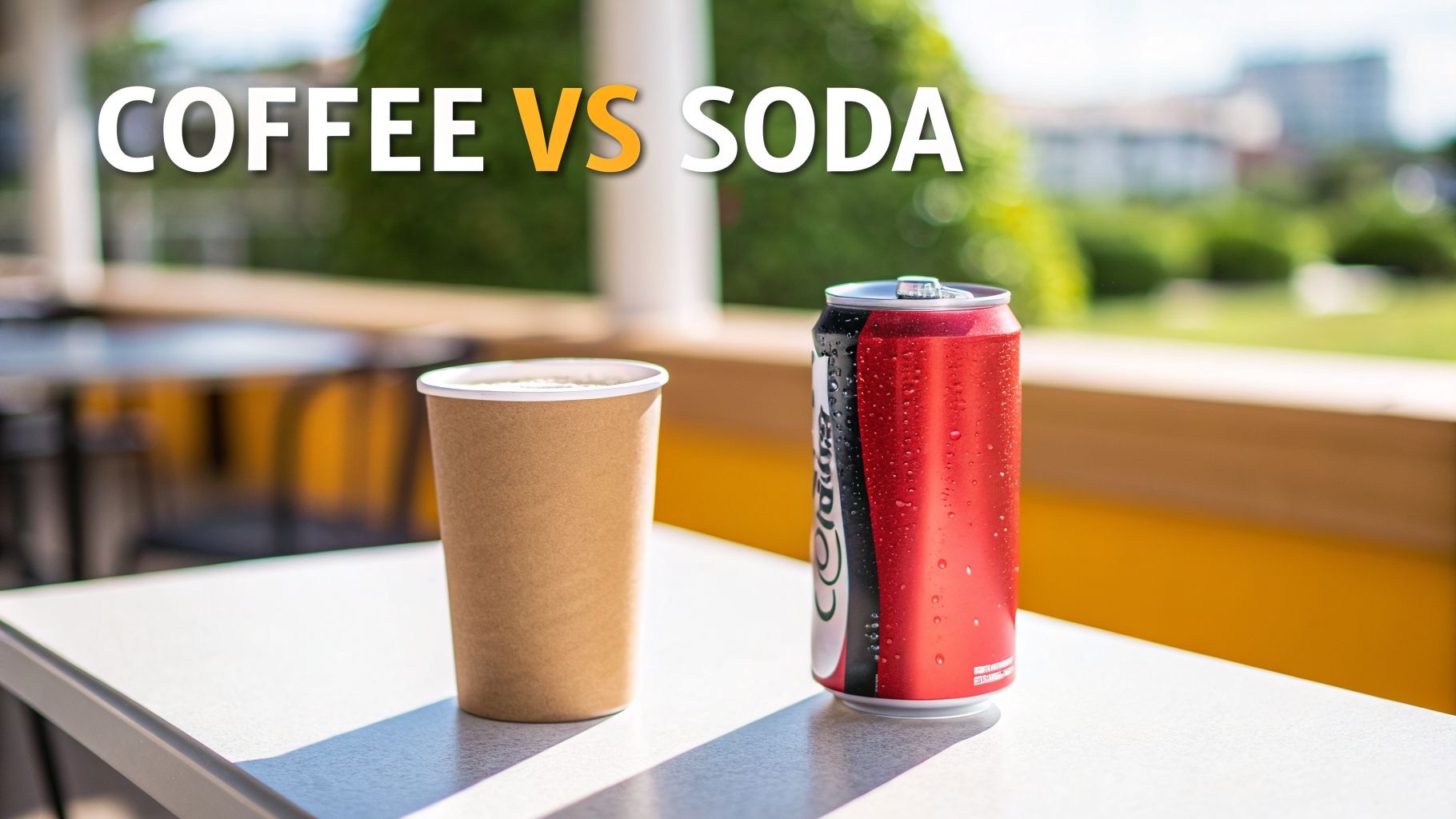
While looking at the total caffeine in your cup is a decent starting point, it doesn't really capture the whole picture. To understand the kick you're going to get, you have to look at caffeine concentration—the amount of caffeine packed into each fluid ounce. This is what separates a gentle lift from a serious jolt.
Take a standard 12-ounce can of cola, which has about 34 mg of caffeine. When you do the math, that comes out to a very mellow 2.8 mg per ounce. It's a low-density dose, which is why a soda offers more of a slow, subtle buzz than a sharp spike in energy.
Now, let's compare that to your daily 8-ounce cup of drip coffee. With around 95 mg of caffeine, it delivers nearly 12 mg per ounce. That's more than four times the concentration of the cola, and it’s a big part of why that morning coffee feels so essential.
The Power of Potency
This is where things get really interesting, especially when we bring in drinks like espresso. A single 1-ounce shot of espresso can contain a staggering 64 mg of caffeine. That’s 64 mg per ounce, making it by far the most concentrated common source of caffeine you can find.
Let’s lay it all out so you can see the difference in potency side-by-side:
- Cola: ~2.8 mg/fl oz
- Brewed Coffee: ~12 mg/fl oz
- Cold Brew: ~20 mg/fl oz
- Espresso: ~64 mg/fl oz
This shows that even though a big glass of cold brew has more total caffeine than a tiny espresso, the espresso shot hits with much greater intensity. You’re getting a much stronger kick in a much smaller package.
The real takeaway here is that concentration, not just volume, determines the impact. A small, potent espresso shot can feel much more powerful than a large, diluted soda because its caffeine is so densely packed.
Once you get a feel for this, you can be much more deliberate about managing your energy. If you need a fast, sharp boost to get you going, a concentrated source like espresso is your best bet. For a smoother, more sustained lift without the jitters, a less concentrated choice like a quality instant coffee works beautifully. To dive deeper, you can explore the entire world of coffee caffeine content in our complete guide.
What Really Determines Your Coffee's Caffeine Kick?
When we ask, "Does coffee have more caffeine than soda?" we have to get specific about the coffee. Unlike soda, where caffeine is a precisely measured additive, coffee's kick comes from a blend of nature and technique. This means the final amount in your cup can vary wildly depending on a few key choices.
The first, and maybe most important, factor is the coffee bean itself. You're mainly dealing with two types: Arabica and Robusta. Arabica beans are famous for their smooth, complex flavors, but they're lighter on caffeine. Robusta beans, on the other hand, live up to their name with a bold, strong flavor and pack nearly double the caffeine.
From Bean to Brew
Next up is your brewing method. How you get the coffee from the grounds into your cup plays a huge role in how much caffeine comes along for the ride. Generally, the more time the grounds spend in hot water, the more caffeinated the result.
- Grind Size: A finer grind creates more surface area, which helps water pull out more caffeine more quickly. This is a big reason why espresso is so concentrated.
- Water Temperature: Hot water is much better at extracting caffeine than cold water. It's why making cold brew is a low-and-slow process that takes hours, not minutes.
- Brew Time: Simply put, the longer the water and coffee are in contact, the more caffeine will end up in your mug.
And here’s a common misconception: many people think a dark, oily roast means more caffeine. The opposite is actually true. The roasting process burns off a tiny bit of caffeine, so lighter roasts tend to have a slightly higher caffeine content when measured by weight.
The big takeaway here is that you're in the driver's seat. By playing with your choice of beans and how you brew them, you can dial your coffee’s caffeine up or down to get the exact boost you’re looking for.
This natural variability is a world away from the fixed formula of a can of soda. For a reliable and convenient middle ground, you might want to learn more about the caffeine content in instant coffee, which offers a much more consistent dose.
Choosing Your Drink for Practical Scenarios
Knowing the numbers is one thing, but how do you apply them to your actual day? The real question isn't whether coffee is "better" than soda, but which one is right for this particular moment. The best choice depends entirely on what you need, what you're doing, and your own health considerations.
For instance, if you're a professional staring down a complex project first thing in the morning, a cup of brewed coffee is your best bet. That significant caffeine hit is perfect for sharpening your focus and keeping you locked in for a few hours.
But what about a casual afternoon hang with friends? That’s where a can of soda makes more sense. It provides a little lift and some sweet, bubbly refreshment without the intense jolt of a strong coffee. It's more of a social drink, giving you a light, enjoyable buzz that won’t keep you staring at the ceiling later that night.
Matching the Drink to the Demand
Ultimately, your choice often comes down to the task at hand. Let's walk through a couple of real-world situations to see how this plays out.
Scenario 1: The Student Cramming for an Exam A student pulling an all-nighter needs sustained energy and focus. In this case, coffee is the obvious winner. A strong cup of drip coffee—or even a quality instant coffee—delivers that potent, long-lasting boost needed to stay alert and actually absorb information.
Scenario 2: The Outdoor Adventurer When you’re camping or hiking, portability is everything. A standard 8-ounce coffee has about 96 milligrams of caffeine, and you’d have to lug around multiple cans of soda to get anywhere close to that. This is where a great instant coffee really shines. A single packet, like one from Cartograph Coffee, packs 65-100 milligrams into a lightweight, no-fuss format, making it far more practical than heavy soda cans or bottles. You can read more about healthy caffeine habits in this detailed guide from the Mayo Clinic.
The question shifts from "Does coffee have more caffeine than soda?" to "How much caffeine do I need right now?" Coffee delivers a powerful, efficient dose for high-demand moments, while soda offers a gentler, more recreational lift.
Once you understand these differences, you can start making smarter choices for your energy levels. And if you're looking for that perfect refreshing boost for a warm day, you might be interested in our guide to the caffeine in iced coffee.
The Health Impact Beyond Just Caffeine
It's easy to get caught up in the caffeine debate when comparing coffee and soda. But if you’re only asking which one has more, you're missing the bigger picture for your health. What else is in your cup is a far more important question.
A simple cup of black coffee is wonderfully straightforward. It’s essentially just coffee bean extract and water, meaning it has almost no calories, no fat, and no sugar. You get a clean energy boost from its natural caffeine and a dose of antioxidants without any extra baggage.
Soda, however, is playing a totally different game. Its ingredient list is built around carbonated water, various flavorings, and a hefty amount of added sugar or artificial sweeteners.
Sugar and Additives Show the Real Difference
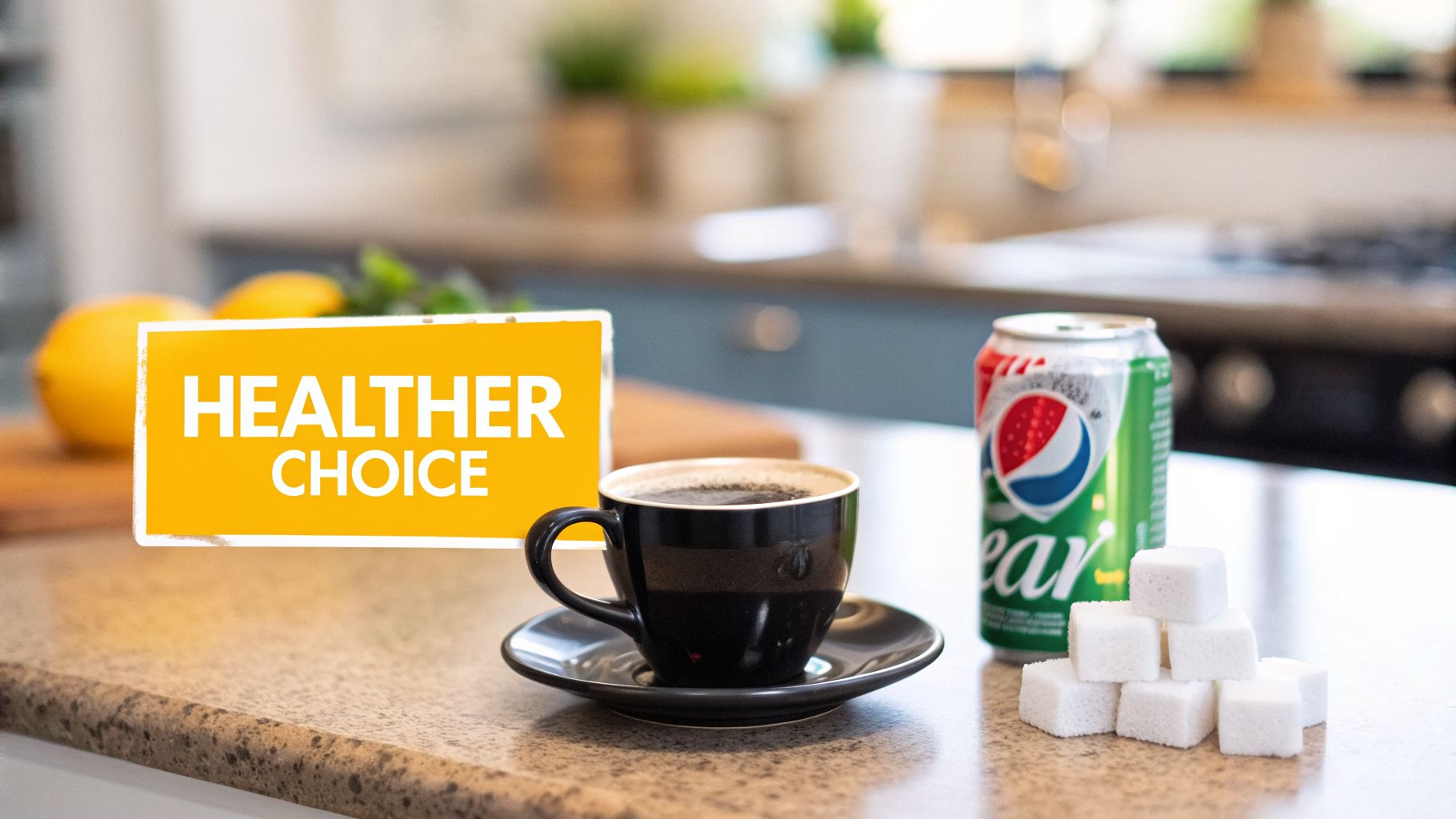
This is where the health comparison really tips the scales. A typical 12-ounce can of cola contains a staggering 39-40 grams of added sugar. To put that in perspective, that’s about 10 teaspoons of sugar, which can easily blow past the recommended daily limit for most adults in a single drink.
The core health distinction is simple: unadulterated coffee is a natural, minimalist beverage, while soda is a processed drink engineered with sugar and additives. For daily consumption, this difference is crucial.
So, when you step back, the choice isn't just about managing your caffeine. A standard cup of brewed coffee gives you 96 mg of caffeine with virtually no sugar. That 12-ounce cola? It has just 30-40 mg of caffeine, but it comes with a 40-gram sugar payload. You can see the full breakdown for yourself by exploring the composition of popular drinks.
For anyone trying to make a healthier choice, the path is clear. Regular soda consumption is tied to numerous health issues, while moderate coffee intake is actually linked to several potential benefits. If you want to take it a step further, opting for an organic product like Cartograph Coffee's instant coffee ensures you’re also skipping potential pesticides, giving you a clean source of energy that supports your wellness goals.
Answering Your Top Questions About Coffee and Soda
Even with all the numbers laid out, a few common questions always seem to pop up. Let's get straight to the answers so you can make smarter choices about what you're drinking.
Does Diet Soda Have More Caffeine Than Regular Soda?
Not necessarily. It really comes down to the specific brand’s recipe, not whether it’s a diet version or not. The idea that "diet" automatically means a bigger caffeine jolt is a common misconception.
Take Coke, for example. Diet Coke has 46 mg of caffeine, while a classic Coca-Cola has just 34 mg. But if you look at Pepsi, both the regular and diet versions have nearly identical caffeine levels. The only way to know for sure is to check the label before you sip.
How Much Coffee Is Safe To Drink Per Day?
Most health authorities agree that up to 400 milligrams of caffeine a day is safe for the average healthy adult. To put that in perspective, that’s about four 8-ounce cups of regular brewed coffee or around six shots of espresso.
Keep in mind, this is just a general guideline. Your personal tolerance can vary a lot depending on your metabolism, body weight, and even your genetics. The best advice is always to listen to your body.
Does Decaf Coffee Have Zero Caffeine?
Nope. While the decaffeination process is impressive, removing about 97% of the caffeine, it doesn't get rid of every last bit. A standard 8-ounce cup of decaf coffee still has a small amount, usually somewhere between 2–7 milligrams.
For most people, that tiny amount is unnoticeable and won't give you an energy boost. But it’s an important detail if you’re extremely sensitive to caffeine or have been advised by a doctor to avoid it completely.
Is Instant Coffee Weaker Than Brewed Coffee?
On average, yes. A serving of instant coffee usually lands in the 60–80 mg range for caffeine content. That's a bit less than the typical 95 mg you'd get from a cup of drip coffee.
The real benefit of instant coffee, though, is the control it gives you. You can easily dial your caffeine intake up or down just by changing how much powder you add to your water. It puts the power to customize your cup right in your hands.
For a perfectly balanced, convenient, and organic option that puts you in control, explore the world of Cartograph Coffee. Our premium instant coffee is crafted for those who demand quality and flavor, no matter where their day takes them. Start your journey to better coffee today.